

Table of Contents
- What You Actually Pay For in Christian Apparel
- Best Christian Apparel Brands: What Separates Them
- Bold Christian Apparel for Men: Cost-Per-Wear Reality Check
- Is Expensive Christian Apparel Worth It? The Verdict
- Minimalist vs. Bold Design: Which Lasts Longer
- DIY vs. Buying: The Real Comparison
- How to Judge Any Brand Before You Buy
- The Zero FG Approach
- Frequently Asked Questions
Last Updated: September 13, 2026
What You Actually Pay For in Christian Apparel
You're paying for fabric weight, print method, cut, and wash durability. Christian apparel is clothing printed or embroidered with scripture, gospel language, or faith-based imagery for everyday wear.
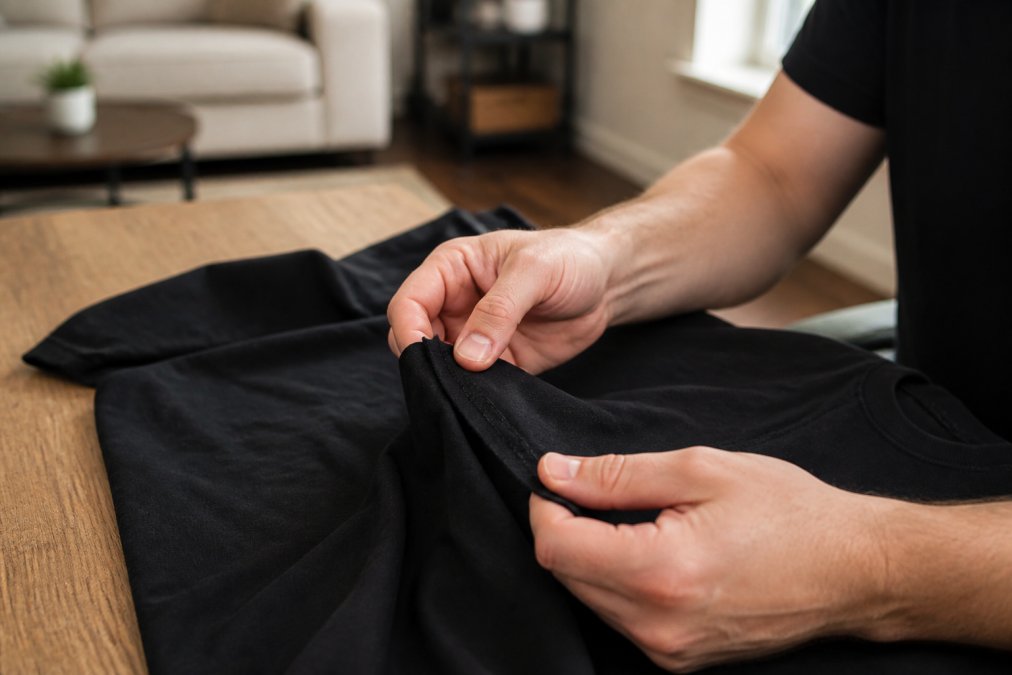
Fabric Weight and Construction
Heavyweight cotton (180 g/m² and up) keeps its shape and resists see-through. Look for tubular knit, ribbed seam-free collars with shoulder tape, and double-needle stitching at stress points.
Print Method and Durability
Screen printing delivers bold, long-lasting coverage. Cracking signals a thin ink deposit or cheap blank, not the design.
Best Christian Apparel Brands: What Separates Them
The best Christian apparel brands name their fabric and print specs. If a brand can't tell you the cotton weight and print method, you're buying a promise, not a product.
The Transparency Checklist
Run any brand through five questions: is fabric weight listed in g/m², is the print method named, are care instructions specific, and is there a donation commitment with a named recipient?
Ethical Manufacturing and Fair Wages
U.S. Department of Labor wage and hour guidance sets the baseline for lawful pay and overtime in domestic production, and international supply chains are typically held to comparable third-party audit standards.
Bold Christian Apparel for Men: Cost-Per-Wear Reality Check
Bold Christian apparel for men costs more up front because designs are larger, ink coverage heavier, and blanks thicker. A $19.95 heavyweight tee worn twice a month for two years is roughly $0.42 per wear; a $9.95 thin tee retired after six months lands at about $0.83 per wear.
| Item | Price | Expected Lifespan | Wears per Month | Cost Per Wear |
|---|---|---|---|---|
| Heavyweight gospel tee | $19.95 | 24+ months | 2 | ~$0.42 |
| Heavyweight crewneck | $34.95 | 30+ months | 2 | ~$0.58 |
| Budget thin tee | $9.95 | 6 months | 2 | ~$0.83 |
Cost-per-wear is the only price comparison that matters: sticker price tells you what you pay once, cost-per-wear what you actually spend.

Where the Money Goes
A $19.95 heavyweight tee breaks down into fabric, print, labor, shipping, and margin, thicker cotton and denser ink coverage move the number most.
Is Expensive Christian Apparel Worth It? The Verdict
Yes, when three conditions hold: heavyweight fabric, a disclosed print method, and a named manufacturing country. Past a certain ceiling on what a cotton tee can cost, you're buying a label.
Vanity vs. Expression
Vanity is buying to be seen; expression is buying to say something true. A $19.95 shirt that starts one conversation about faith at a gas station did its job; a $200 shirt that never leaves the closet didn't.
Consumerism and Stewardship
A theological view of consumerism starts with one question: does this purchase serve the mission or the ego? Fast fashion is the real problem: a closet of $9 shirts that fall apart is more wasteful than four well-made pieces worn for years.
Federal Trade Commission guidance on green claims and marketing requires brands to back environmental and sourcing claims with evidence, which is why vague "sustainable" language on a product page deserves scrutiny.
Supporting Missions and Charitable Causes
IRS tax-exempt organization search lets you confirm whether a named nonprofit recipient is a registered charity before you take a brand's donation claim at face value.
Minimalist vs. Bold Design: Which Lasts Longer
Minimalist design ages better: a small wordmark or single symbol stays wearable for years, while a trend-driven graphic dates itself. Bold has its place, a large distressed crown or full-back scripture print is a statement piece, worn less often by design.
DIY vs. Buying: The Real Comparison
Printing your own shirt costs less per unit only if you own the equipment, a heat press, blanks, transfer paper, and a design file add up fast. Buying wins on consistency; DIY makes sense for one-off group orders or a design you can't find anywhere else.
How to Judge Any Brand Before You Buy
Run this sequence on any product page: find the fabric weight (if it isn't listed, assume it's light), identify the print method, read the care instructions, and compare cost-per-wear, not sticker price.
The Zero FG Approach
Zero FG builds defiant Christian apparel for believers who refuse to apologize for their faith. The catalog runs from the A Relationship. Not a Religion. Faith T-Shirt at $19.95 up to the Christ Is King Heavyweight Gospel Crewneck at $34.95, built with premium heavyweight fabric and double-needle stitching.
For a statement piece, the Lion of Judah Heavyweight Tee carries a high-definition fiery design in Midnight Black only, printed on a heavyweight blank.
A Note on Wardrobe Investment
A wardrobe investment means buying four pieces you'll actually wear: two heavyweight tees, one crewneck, and one statement piece covers most of a week.
The hardest part isn't the price, it's the noise: every brand calls itself premium and none of it tells you whether the shirt survives a year. Zero FG cuts through that by publishing the fabric weight and building every piece on heavyweight cotton with double-needle construction. Start with the Relationship Over Religion Crewneck at $34.95 or the Christ Is King Heavyweight Gospel T-Shirt at $19.95, wear it hard, and let the cost-per-wear math make the case. Get started with Zero FG and put your faith on your chest where people can see it.

Frequently Asked Questions
Is it worth buying expensive Christian apparel?
It depends on how often you wear it. A $34.95 crewneck worn twice a week for two years costs about 34 cents per wear. A $10 shirt that fades after five washes costs more per wear. Look at fabric weight, stitching, and print method before the price tag. Heavyweight cotton and double-needle stitching hold up longer, so the upfront cost spreads across years of use.
What factors justify the price of premium Christian clothing?
Three things: material and construction. Heavier cotton (like 180 g/m²) resists stretching and thinning. Double-needle stitching and ribbed collars prevent seam failure.
How does fabric quality impact the longevity of faith-based apparel?
Fabric weight and knit construction determine how a shirt survives washing. Medium-weight cotton (180 g/m²) keeps its shape better than thin alternatives. Check the care label: cold wash and low heat extend any garment's life significantly.